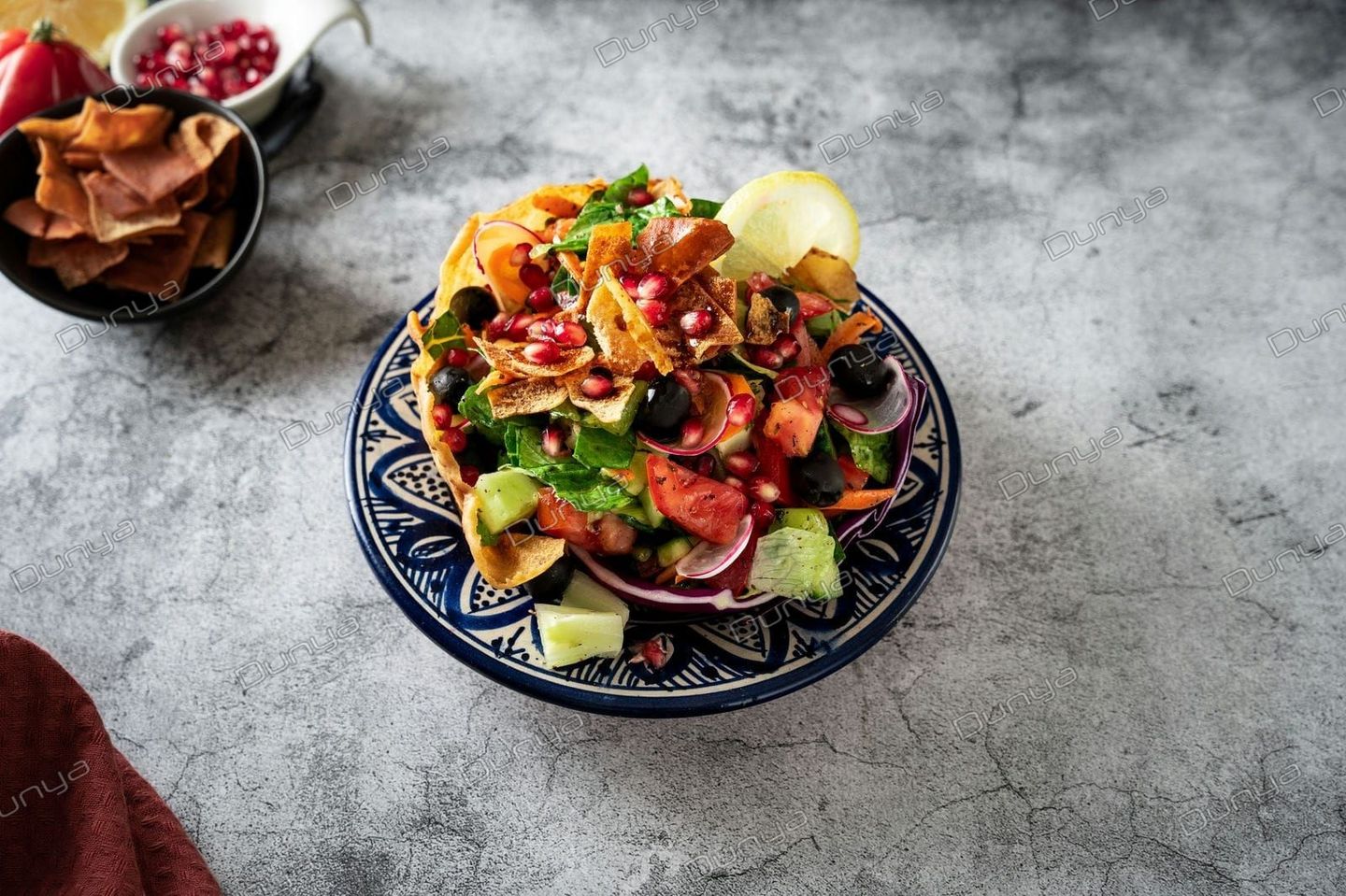
Fattoush comes from Lebanon and Syria and started out as a way of using up leftovers: yesterday’s flatbread was toasted, broken into pieces and tossed with vegetables from the garden. The name comes from the Arabic word for ‘to crumble’. What began as thrift has become one of the best-known salads in Arabic cooking. During Ramadan it’s on the iftar table almost every evening in many families, because it’s light and refreshing after a long day of fasting.
How we serve fattoush
At Dunya in Mannheim, everything crunchy goes into the bowl: romaine lettuce, ripe tomatoes, cucumber, red onions and radishes, with plenty of mint and parsley scattered over. On top go crispy toasted flatbread and ruby-red pomegranate seeds for a sweet freshness.
It’s dressed with a pomegranate and lemon vinaigrette – fruity and sharp at the same time. It soaks into the bread a little, which is why fattoush is best eaten while the bread still has its crunch.
What goes with fattoush
Fattoush is the fresh counterpoint to anything creamy or fried. Next to hummus, kibbeh or falafel, it cleanses the palate. The large portion is meant for sharing.
With grilled food, fattoush is practically a given: try it with the Dunya Grill Platter, shish taouk or a shawarma plate. If you just want a side for yourself, go for the small fattoush.
For buffets and parties
A colourful salad belongs on every buffet. For celebrations and company events, we put together salads and mezze as catering – delivered within about 70 km of Mannheim, with no minimum order.